
Mike Hancock is the founder of Hancock Injury Attorneys, a former insurance defense attorney, and an AV-Preeminent–rated lawyer by Martindale-Hubbell, with over 35 years of experience practicing personal injury law.
Tampa's e-scooter accidents have become increasingly common in recent years as electric scooters (e-scooters) surge in popularity as a convenient and eco-friendly way to get around. Whether you're commuting through downtown or riding along Bayshore Boulevard, these app-based devices offer quick access to transportation—but their rise has also led to a sharp increase in serious injuries.
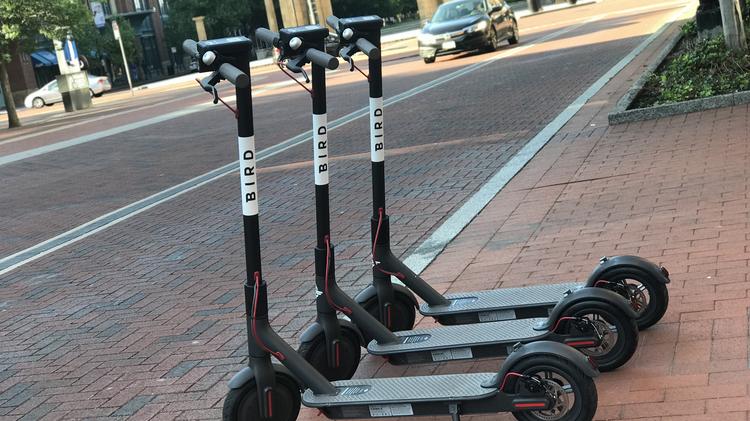
At Hancock Injury Attorneys, we’ve seen firsthand how Tampa e-scooter accidents can leave riders with lasting physical and financial damage. If you’ve been hurt in an e-scooter crash, understanding your e-scooter injury rights is critical.
Why Tampa's E-Scooter Accidents Are on the Rise
Tampa’s warm climate and growing infrastructure for micromobility make it an ideal city for e-scooter usage. Unfortunately, this rapid growth has outpaced safety regulations. Many riders are unfamiliar with traffic rules or assume they have the same protections as pedestrians or cyclists. Combine that with distracted drivers, poor road maintenance, and the occasional mechanical failure, and the risk of e-scooter accidents increases significantly.
Tampa’s urban core, particularly areas like Ybor City, Channelside, and Hyde Park, has seen a noticeable spike in e-scooter accidents. These hotspots are dense with traffic, pedestrians, and nightlife activity, which are all factors that contribute to accidents. In some cases, scooter riders are struck by vehicles; in others, crashes occur due to sudden stops, potholes, or other hazards.
Common Injuries from E-Scooter Crashes
Unlike cars, e-scooters offer no physical protection to riders. That means even low-speed e-scooter accidents can result in serious injuries. Riders often have unexpected injuries after a minor accident.
Common e-scooter accident injuries include:
- Traumatic brain injuries (especially since riders often don’t wear helmets)
- Broken bones, particularly in the arms, wrists, and collarbone
- Road rash and lacerations requiring stitches or skin grafts
- Spinal cord injuries and nerve damage
- Dental injuries and facial trauma
These injuries often require extensive medical treatment and time away from work, both of which can be financially and emotionally draining. If you’ve suffered any of these injuries in a Tampa e-scooter accident, it’s important to explore your legal options with an experienced personal injury attorney.
Who Is Liable for E-Scooter Injuries in Florida?
One of the biggest questions injured riders ask is, “Who’s responsible for paying my medical bills?” The answer depends on the details of the accident.
If a negligent driver hit you while you were riding an e-scooter, you may be able to pursue compensation through their auto insurance policy. Florida’s no-fault insurance law requires all registered drivers to carry a minimum of $10,000.00 in Personal Injury Protection (PIP) insurance coverage and a minimum of $10,000.00 in Property Damage Liability (PDL) insurance coverage. PIP coverage covers the driver, any members of their household, any passengers, and any pedestrians, bicyclists, or e-scooter riders they may hit. If the driver was at fault for your e-scooter accident, you may be able to claim their PIP coverage.
In other cases, the e-scooter company itself may be liable. If the accident was caused by a mechanical failure, such as faulty brakes or a locked front wheel, the e-scooter manufacturer or rental provider could be held responsible.
Additionally, if poor road conditions contributed to the crash, the city might share liability. Proving fault in these cases can be complex, which is why it’s critical to work with an experienced Tampa personal injury attorney who has handled similar e-scooter accidents.
Video Transcript:
Ever wonder how they come up with those big settlement numbers? Let me explain how personal injury claims are calculated. Personal injury claims basically follow the same pattern no matter what the injury is, what causes the injury, whether it's a car accident, a slip and fall, a trip and fall, any other type of product defect case causing an injury, the evaluation and calculation of damages is always the same.
Let's take a car accident case, the most typical type of personal injury case. In a car accident case, the first thing we're going to do is look at who caused the accident. Is it extremely 100% clear that the other person was the sole cause of the accident or are we dealing with a situation where our client is partly at fault also? or in some cases we have multiple defendants that contributed to the cause of the accident.
First we're dealing with fault. Oftentimes it's 100% the fault of the other driver. Let's say in a car accident case in Florida we follow something called a contributory fault which means that even if the driver admits that they're at fault they can also claim that our client was partly at fault themselves. So that gets taken into account.
The second thing that is put into the evaluation and calculation of a personal injury claim is the amount of your damages. And your damages are essentially broken down into economic damages and non-economic damages. And the economic damages are generally medical bills up to the date of a settlement. We call those past medical bills and then a calculation of what your future medical bills are going to be as a result of your injuries.
So, we're taking all of that past and future medical bills into account. We're also taking into account the extent of your lost wages. And when we go to resolve your claim or settle your claim, anything from that day in the past is called past lost wages. Anything in the future that you haven't yet lost but are expected to lose is called loss of earning capacity.
A perfect example would be a client who works a manual labor job. Let's say they build homes. They're a brick layer. And as a result of the accident, they can no longer be a brick layer making $50,000 a year and they don't have the other educational background to go out there and do a job making the similar amount of money. So those clients sometimes have a loss of earning capacity. They're not going to be unable to work for the rest of their lives. They're just going to be unable to make as much as they did prior to the accident.
We calculate that loss of earning capacity. We use experts such as vocational rehabilitation experts to help us determine what the loss of earning capacity is. And then to calculate those damages, we also bring in an economist which is required under the law to bring all of that future loss of earning capacity back to present value.
Those are the economic damages, the medical bills and lost wages, past and future. Then we have the non-economic damages that are broken down into what is generally referred to as pain and suffering. But in Florida, pain and suffering is really seven different elements. You’ve got compensation for your pain, your suffering, your mental anguish, your inconvenience, your loss of enjoyment of life, and your disability and scarring. Pain and suffering is the term we commonly use, but it’s really seven different elements.
We then also figure out what your past pain and suffering is worth. We also work with your doctors and other experts, we figure out what type of non-economic pain and suffering damages you're going to have in the future. So that goes into the evaluation of your future pain and suffering.
So all of those things start with how the accident happened. One of the things that are really important in car accident cases is what does the damage look like to the cars? Is it just a tiny dent on the bumper or is your car total? All of those factors go into the evaluation and calculation of damages in a personal injury claim.
If you have any other questions regarding the calculation or worth of your personal injury claim, please give me a call at 813-915-1110. I'll be happy to discuss it with you. The consultation's always free. We can do it over the phone. I'll be happy to answer any questions you might have.
Steps to Take After an E-Scooter Accident
The moments after an e-scooter crash can be overwhelming, but taking the right steps early on can help protect your health and your legal case:
- Seek medical attention immediately. Even if your injuries seem minor, symptoms may take days or weeks to show up or worsen over time.
- Report the incident. Call 911 and ensure the police create an accident report. This will serve as a vital piece of evidence.
- Document everything. Take photos of the accident scene, your injuries, the e-scooter, and any vehicles involved.
- Gather witness information. If anyone saw the accident, get their name and contact information.
- Preserve the scooter, if possible. Don’t return or move it before an investigation, especially if a malfunction was involved.
- Avoid making statements to insurance companies without legal advice. What you say can be used against you later.
- Contact an experienced personal injury attorney. At Hancock Injury Attorneys, we’ll evaluate your case and fight for the compensation you deserve.
Tampa e-scooter accidents are more than just minor mishaps; they can be life-changing events. If you’ve been injured while riding, don’t try to navigate the legal system alone. Let Hancock Injury Attorneys help you understand your e-scooter injury rights and guide you every step of the way. Call 813-915-1110 to schedule a free consultation today and take the first step toward recovery and justice.