
Mike Hancock is the founder of Hancock Injury Attorneys, a former insurance defense attorney, and an AV-Preeminent–rated lawyer by Martindale-Hubbell, with over 35 years of experience practicing personal injury law.
Many people assume that if the at-fault driver left the scene after a crash, there is no way to recover compensation. Mike Hancock explains that while hit-and-run accidents create unique challenges, victims often still have legal options under Florida law. Knowing what to do immediately after the accident can make a significant difference in protecting your health and your financial recovery.
What Should I Do After a Hit-and-Run?
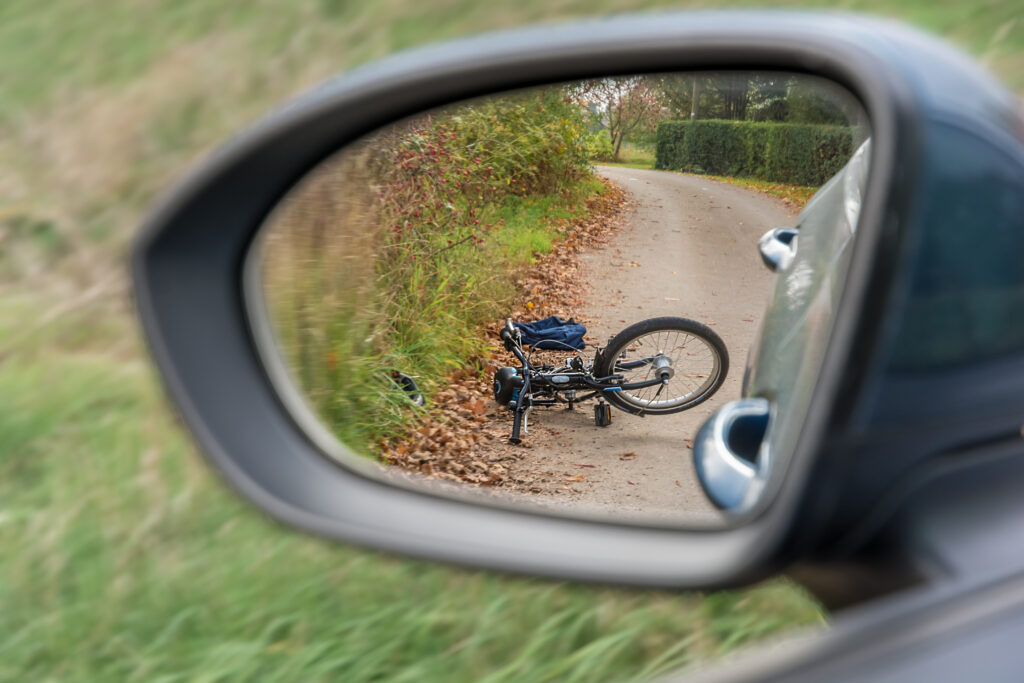
A hit-and-run accident occurs when a driver causes a collision and leaves without stopping to exchange information or provide assistance. While this illegal act can leave victims feeling overwhelmed and uncertain, it does not erase the at-fault driver's responsibility. Even if the driver is never identified, there may still be ways to pursue compensation for your injuries and losses.
Your first priority should always be your safety. Call 911, seek medical attention, and report the accident to law enforcement as soon as possible. Even injuries that seem minor can become more serious over time, and a police report serves as valuable evidence when filing an insurance claim or pursuing legal action. If it is safe to do so, take photographs of the accident scene, your vehicle, road conditions, and any debris. Witness information and details about the fleeing vehicle, even a partial license plate or vehicle color, can also be extremely valuable.
Can I Still Recover Compensation if the at-fault Driver left the scene of the Accident?
Many accident victims are surprised to learn that compensation may still be available if the other driver cannot be found. In Florida, uninsured motorist (UM) coverage often applies to hit-and-run accidents because the fleeing driver is treated as an uninsured motorist. Depending on your policy, UM coverage may help pay for medical expenses, lost wages, pain and suffering, and other damages. If you carry collision coverage, it may also help pay for repairs or replacement of your vehicle. Additionally, Florida's Personal Injury Protection (PIP) coverage provides an initial source of payment for certain medical expenses and lost wages, regardless of who caused the accident.
Unfortunately, insurance companies do not always make the claims process easy. Even when you file a claim under your own policy, insurers may question how the accident occurred, dispute the severity of your injuries, or offer a quick settlement that does not reflect the full value of your claim. Delaying medical treatment or waiting too long to report the accident can also make it easier for an insurance company to challenge your case.
How Can a Personal Injury Attorney Help Me After A Hit-and-Run Accident?
Hit-and-run cases often require a thorough investigation and careful documentation. An experienced personal injury attorney from our firm can help preserve evidence, obtain surveillance footage, interview witnesses, review available insurance coverage, and handle all communication with insurance companies. By building a strong claim from the beginning, your attorney can work to identify every available source of compensation while protecting your rights throughout the process.
Take Action Today: Protect Your Rights After a Hit-and-Run

If you've been injured in a hit-and-run accident, don't assume you have no options. Prompt medical care, proper documentation, and experienced legal guidance can make all the difference. Call Hancock Injury Attorneys at 813-915-1110 to schedule a free consultation with one of our experienced Florida personal injury attorneys to discuss your case, understand your insurance coverage, and pursue the compensation you may be entitled to recover.
Video Transcript
Hi, I'm Mike Hancock with Hancock Injury Attorneys here in Tampa, Florida. Today I want to talk about a situation that's frustrating, overwhelming, and unfortunately more common than you might think. What happens if you're involved in a car accident and that driver leaves the scene?
A hit-and-run accident can leave you shaken, injured, and wondering if you're going to be stuck paying for someone else's reckless decision. You may be asking yourself, "Can I still recover compensation? Do I even have a case if the other driver left the scene?" The short answer is yes, but how that happens and what you do next can make a huge difference in the outcome of your case. Let's walk through exactly how hit-and-run accidents work, what steps you need to take, and what options might be available to you under Florida law.
First, let's talk about what a hit-and-run accident actually is. A hit-and-run occurs when a driver causes an accident and leaves the scene without stopping to exchange information or provide help. That could mean they speed away immediately, or it could mean they pulled over briefly, as it's happened in many of our clients' cases, and then left before police arrived. Either way, leaving the scene of an accident is illegal, and it doesn't eliminate that driver's responsibility.
Unfortunately, when the at-fault driver leaves, the situation becomes more complicated. There's no insurance card that's exchanged. There's no name. There's no address. There are no phone numbers exchanged. There's no statement from the other driver. And for many accident victims, it creates a lot of fear and uncertainty about what comes next.
Just because the other driver left does not mean you are automatically out of options. The first thing that you should consider after a hit-and-run accident is to focus on your own safety. Check yourself and anyone else involved for injuries and call 911 immediately.
Even if you believe your injuries are minor, it's critical to have law enforcement and medical professionals respond.
Adrenaline can hide pain and some injuries, especially head, neck, and what we call soft tissue injuries, don't fully appear until hours or even days later.
Calling the police is especially important in a hit-and-run. The police report becomes one of the most important pieces of evidence in your case. It documents when and where accidents happened, and what damage was observed by the police officer. The police officer will get witness statements if possible and any information about the fleeing vehicle if it's available.
While you're still at the scene, if it's safe to do so, document everything you can. Take photos or videos of your vehicle, the surrounding area, skid marks, debris, traffic signs, and anything else that might help show how the accident occurred. If you notice anything about the other vehicle, the color, the make, the model, or even part of the license plate, make a note of it as soon as possible.
If there are witnesses, talk to them. Get their names and contact information. Witness statements can be critical in hit-and-run cases, especially when the at-fault driver hasn't been identified yet.
Once you've left the scene, seek medical care as soon as possible. Follow your doctor's recommendations and keep records of all treatment. Medical documentation is not only important for your health, but it also plays a major role in any insurance claim or legal case that we file.
Now, let's get to the question most people really want answered. Can you still recover compensation if the at-fault driver left the scene? In many cases, yes. But how you recover compensation depends on whether the other driver is eventually identified and what insurance coverage is available.
So, if the at-fault driver is later found, you can pursue a claim against that driver just like you would in any other case. Leaving the scene doesn't protect them from liability. In fact, hit-and-run drivers often face serious legal consequences, criminal consequences, in addition to the civil liability that we would impose on them in a personal injury case.
However, there are many situations where the other drivers are never found, and that's where uninsured motorist coverage becomes extremely important. In Florida, many drivers carry uninsured or underinsured motorist coverage. It's basically the same coverage, often called coverage.
A hit-and-run is treated as an uninsured motorist. When a driver leaves the scene of an accident and is considered a hit and run, it is considered that you were hit by an uninsured motorist. So that's why uninsured motorist coverage is so important.
If you have uninsured motorist coverage, we can file a claim for you with your own insurance company to get you compensated for your injuries, your lost wages, your pain and suffering, and other damages that you're entitled to up to the limits of your own policy. This is where many people get confused or frustrated. They assume that because it's their own insurance company, the process will be simple or cooperative. But unfortunately, that's not typically the case.
Even though it's your policy, your insurance company is still a business. Their goal is to minimize payouts at all costs. They may question whether the accident really happened the way you say it did. They may argue about the severity of your injuries. They may push you to give a recorded statement or to settle quickly for less than your claim is worth. And I've seen that a lot in the last few years with many different insurance companies.
This is why hit-and-run cases can be more challenging than the typical accident case. Without another driver present, insurance companies often scrutinize these claims more closely. That's why the documentation and legal guidance are so important.
If you also carry collision coverage, that coverage will help pay for the repairs of your car or pay the total cost of your car due to the negligence of the driver who left the scene. While collision coverage doesn't compensate you for your injuries, it can be a valuable resource for at least getting your property damage paid for after a hit-and-run accident.
Another factor that can come into play is Florida's no-fault insurance laws. Under Florida law, your personal injury protection or PIP coverage, PIP standing for personal injury protection, is generally the first source of payment for medical expenses and a portion of your lost wages, regardless of who caused the crash. That's just how Florida's no-fault system works. PIP benefits can help cover immediate medical needs after a hit and run, but they are often limited and may not fully compensate you for your serious injuries. Everybody is going to have at least a minimum of $10,000 in PIP coverage.
One mistake I see people make is assuming that they don't have a case because the other driver left. As a result, they delay getting medical care. They delay reporting the accident or seeking legal advice. Unfortunately, delays can hurt your claim. Evidence disappears. Witnesses become harder to find, and insurance companies may use those delays to question your credibility.
Another common mistake is giving recorded statements or accepting quick settlements without fully understanding the long-term impact of the injuries you have sustained. Once you accept a settlement, you typically give up the right to seek any additional compensation, even if your injuries turn out to be more serious than you initially thought.
This is where having an experienced personal injury attorney can make a real difference. An attorney can help investigate the accident, preserve evidence, communicate with insurance companies on your behalf, and make sure your rights are protected at every stage of the process.
In hit-and-run cases, attorneys often work with investigators. We review surveillance footage. We analyze crash evidence. We evaluate insurance policies to identify all the possible sources of compensation. We also help our clients understand what their coverage actually includes because many people don't even realize the full benefits that they've actually paid for.
It's also important to set realistic expectations. Hit and run cases can take time. They can be emotionally draining, and they often involve more back and forth with insurance companies than other types of cases. But that doesn't mean it's impossible to recover. Every case is different. The outcome depends on factors like the severity of your injuries, the available insurance coverage, the quality of evidence, and how the claim is handled from the very beginning. What matters most is that you don't try to navigate this process alone when you're injured and overwhelmed.
If you've been involved in a hit-and-run accident, remember this. You didn't cause the accident, and you shouldn't have to carry the financial burden alone. There may be multiple paths to compensation, even if the at-fault driver is never identified.
At Hancock Injury Attorneys, we've helped many people over many years in Tampa and throughout Florida deal with the aftermath of a hit-and-run accident. We understand how stressful these situations can be. We know how to deal with insurance companies that try to minimize or deny your valid claim. If you or a loved one has been injured in an accident where the at-fault driver left the scene, don't wait. Get medical care. Document everything. Speak with an attorney who can help you understand your options.
Thank you for watching. If you found this information helpful, please like this video, subscribe to our channel, and share it with someone else who might need it. And if you have any questions about a hit-and-run accident or any personal injury matter, contact Hancock Injury Attorneys for a free consultation. We're here to help you move forward.
FAQs
Can I still recover compensation if the hit-and-run driver is never found?
Yes. Many Florida drivers have uninsured motorist coverage, which may provide compensation when the at-fault driver cannot be identified. Other insurance benefits, including PIP coverage, may also be available.
Should I call the police even if the damage seems minor?
Absolutely. A police report creates an official record of the accident and can provide important evidence for your insurance claim or legal case. It may also help investigators identify the fleeing driver.
Will my own insurance company automatically approve my claim?
Not necessarily. Insurance companies often investigate hit-and-run claims carefully and may dispute liability or the extent of your injuries. Proper documentation and legal representation can help strengthen your claim.
Why should I speak with an attorney after a hit-and-run accident?
An attorney from Hancock Injury Attorneys can investigate the accident, preserve evidence, communicate with insurance companies, and identify every available source of compensation. Having experienced legal guidance can help you avoid costly mistakes and protect your rights throughout the claims process. Call 813-915-1110 to schedule your free case consultation today.