
Mike Hancock is the founder of Hancock Injury Attorneys, a former insurance defense attorney, and an AV-Preeminent–rated lawyer by Martindale-Hubbell, with over 35 years of experience practicing personal injury law.
Key Takeaways
- The Police Report Is Not the Final Word on Liability: While the Florida Traffic Crash Report can carry significant weight with insurance companies, it is not the final word on liability.
- There is Other Valuable Evidence in Personal Injury Claims: Beyond the police report, experienced attorneys often use several tools to uncover what truly happened in a crash and establish liability.
- Your Car’s Electronic Data Recorder Is Important Evidence: This system records critical information about the moments leading up to and following a crash. It typically captures data from about five seconds before the collision and five seconds afterward, including speed, braking, and impact timing.
After a car accident, many people assume the police report decides everything. If the officer says you caused the crash, it may feel like your case is already lost. Attorney guidance can reveal that the situation is often more complicated than it appears.
Video Transcript:
The police report blames you for the accident. Can you still win? What if the official police report blames you, but you know you didn't cause the accident?
In Florida, the Florida traffic crash report does carry a lot of weight, but sometimes we know the police officer gets it wrong. Rarely does a police officer actually witness the accident happening. The police officer is left with talking with the various people involved in the accident and any witnesses to render an opinion as to who caused the accident and if anyone should receive a ticket for it.
Even if the police officer investigating the accident blames you for causing the accident and you know that's just not the case, the police report is not the end all be all as to who wins or who loses the case. If the police officer didn't witness the accident, he can't render an opinion at trial as to who caused the accident because that would be based on hearsay evidence.
Depending on the accident, we have various ways to prove that the police officer was wrong. The simplest of which is taking witness statements and talking to witnesses about how the accident happened. The second thing is obtaining video that might show the accident. The third would be recreating the accident based upon expert reconstructionists.
One thing that we've used a few times in the recent past is actually downloading your black box data. It's called the electronic data recorder. Every vehicle has it. And once you are involved in an accident, it automatically records 5 seconds before and 5 seconds after the actual collision.
We've been able to prove that the police report is wrong. In a specific case involving a rear-end collision of about four different vehicles, our client was in the middle vehicle and he swore to me that, "Hey, look, I was coming to a stop. I got rear-ended and pushed into the vehicle in front of me." He was taken away, he was seriously injured and taken away by ambulance and they didn't get his version of what happened at the scene.
But the other people blamed him for causing the accident. We were able to have his electronic data recorder, or what we call the black box, same thing as in an airplane, downloaded and reviewed by a forensic engineer who was able to clearly determine that he got rear-ended and pushed into the vehicle in front of him, not the other way around.
And we were successful in concluding that case for policy limits for our client in a case in which initially the insurance adjuster was telling me, "Hey, why are you even making a claim? Your client was the one who caused the accident."
If you have a situation where the Florida Traffic Crash Report blames you for causing the accident and you know that's just not the case, please call me at 813-915-1110. I'd be happy to consult with you and answer any questions you might have and come up with a game plan as to how we can be successful in concluding your case.
The consultation's always free and we can do it over the phone. I'll be happy to answer any questions you might have.
Why The Police Report May Be Wrong
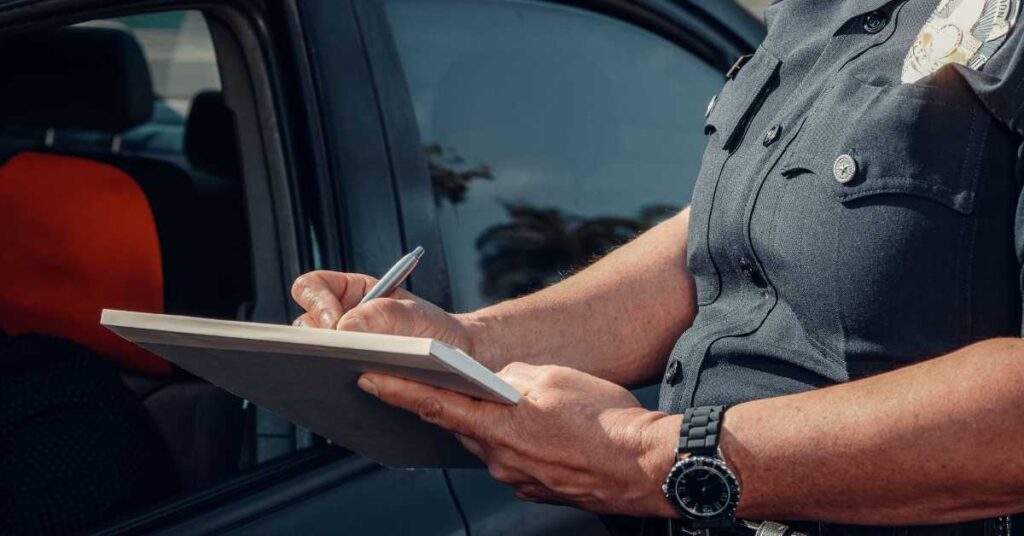
Police officers rarely witness accidents themselves. Instead, they arrive after the crash and gather information from drivers, passengers, and any available witnesses. Based on those conversations and the physical scene, the officer forms an opinion about what likely happened. While the Florida Traffic Crash Report can carry significant weight with insurance companies, it is not the final word on liability.
In many situations, the police report reflects incomplete or one-sided information. For example, an injured driver may be taken away by ambulance before giving their version of events. Other drivers or witnesses may misunderstand what happened or provide conflicting accounts. Because of these factors, mistakes in accident reports do occur.
Another important point is that an officer who did not witness the crash cannot testify in court about who actually caused it if their opinion is based solely on what others told them. That type of testimony can be considered hearsay. As a result, the police report alone does not automatically determine who wins or loses a personal injury claim.
Other Valuable Evidence in Personal Injury Claims
Other than looking at the police report, experienced attorneys often use several tools to uncover what truly happened in a crash. Witness statements can clarify key details that were missed initially. Video footage from nearby businesses, traffic cameras, or dashcams can also reveal the sequence of events. In more complex cases, accident reconstruction experts may analyze the evidence to scientifically determine how the collision occurred.
Modern vehicles also provide valuable data. Many cars contain an Electronic Data Recorder, sometimes called a vehicle’s “black box.” This system records critical information about the moments leading up to and following a crash. It typically captures data from about five seconds before the collision and five seconds afterward, including speed, braking, and impact timing.
This type of evidence can completely change the outcome of a case. In one multi-vehicle rear-end crash, a driver was blamed in the police report for causing the collision. However, the driver insisted they had been slowing down when another vehicle struck them from behind and pushed them into the car ahead. Because the driver was seriously injured and transported from the scene, their account was never included in the initial report.
By retrieving and analyzing the vehicle’s Electronic Data Recorder, a forensic engineer confirmed the driver’s version of events. The data clearly showed that the driver had been rear-ended and forced forward into the other vehicle. This evidence helped resolve the case successfully after the insurance company initially denied responsibility.
Take Action Today: Protect Your Rights After an Accident
If the police report incorrectly blames you for a crash, you may still have a strong case. An experienced car accident attorney from our firm can investigate the evidence, challenge inaccurate conclusions, and work to secure the compensation you deserve for your injuries and losses.

Taking action early can make a critical difference in protecting your rights. Call Hancock Injury Attorneys at 813-915-1110 to schedule your free consultation today.
FAQs
Q: Can a police report determine who wins an accident case?
A: No. While insurance companies often rely on police reports, they are not legally binding. Additional evidence can challenge or correct the report’s conclusions.
Q: What if the officer blamed me but didn’t see the accident happen?
A: If the officer did not witness the crash, their opinion may be based on statements from others. Attorneys can use independent evidence to dispute those conclusions.
Q: What kind of evidence can prove a police report is wrong?
A: Witness testimony, surveillance or dashcam footage, accident reconstruction analysis, and vehicle data recorders can all help clarify what truly happened.
Q: What is a vehicle’s “black box” in an accident investigation?
A: A vehicle’s Electronic Data Recorder captures information such as speed, braking, and impact timing around the moment of a crash. This data can provide powerful evidence about how the accident occurred.